About this tour
In the 17th century, the painters of the Low Countries did something extraordinary. They turned away from the grand historical and religious subjects that had dominated European art for centuries and directed their attention instead to the world immediately around them: light falling through a window, a woman reading a letter, a scholar bent over a globe, a butcher's stall, a winter landscape.
The result was one of the greatest flowerings of painting in the history of art. The Louvre's collection of Dutch and Flemish masters is outstanding, and this tour moves through it with the care and attention these works deserve.
The Astronomer by Johannes Vermeer, 1668 — one of only two Vermeer paintings in French public collections
What you will see
The tour moves between the Dutch and Flemish schools, exploring what separates them and what they share. Vermeer's Astronomer and Lacemaker, Rembrandt's self-portraits and his late Bathsheba, the exuberant energy of Rubens, and the intimate domestic scenes of the Dutch genre painters all feature in a tour that tells the story of a revolution in how artists understood their role in the world.
If there is a particular painter or work you are most curious about, mention it in your request. While nothing can be promised, every effort will be made.
Who is this tour for?
This tour is a natural choice for visitors who love painting and want to understand one of the most important chapters in its history. It is also a wonderful option for those with a connection to the Netherlands, Belgium, or Britain, where the influence of the Dutch and Flemish masters has been so deeply felt.
Availability
The Louvre is closed on Tuesdays. The Northern European painting galleries are also closed on Thursdays.
Important notice
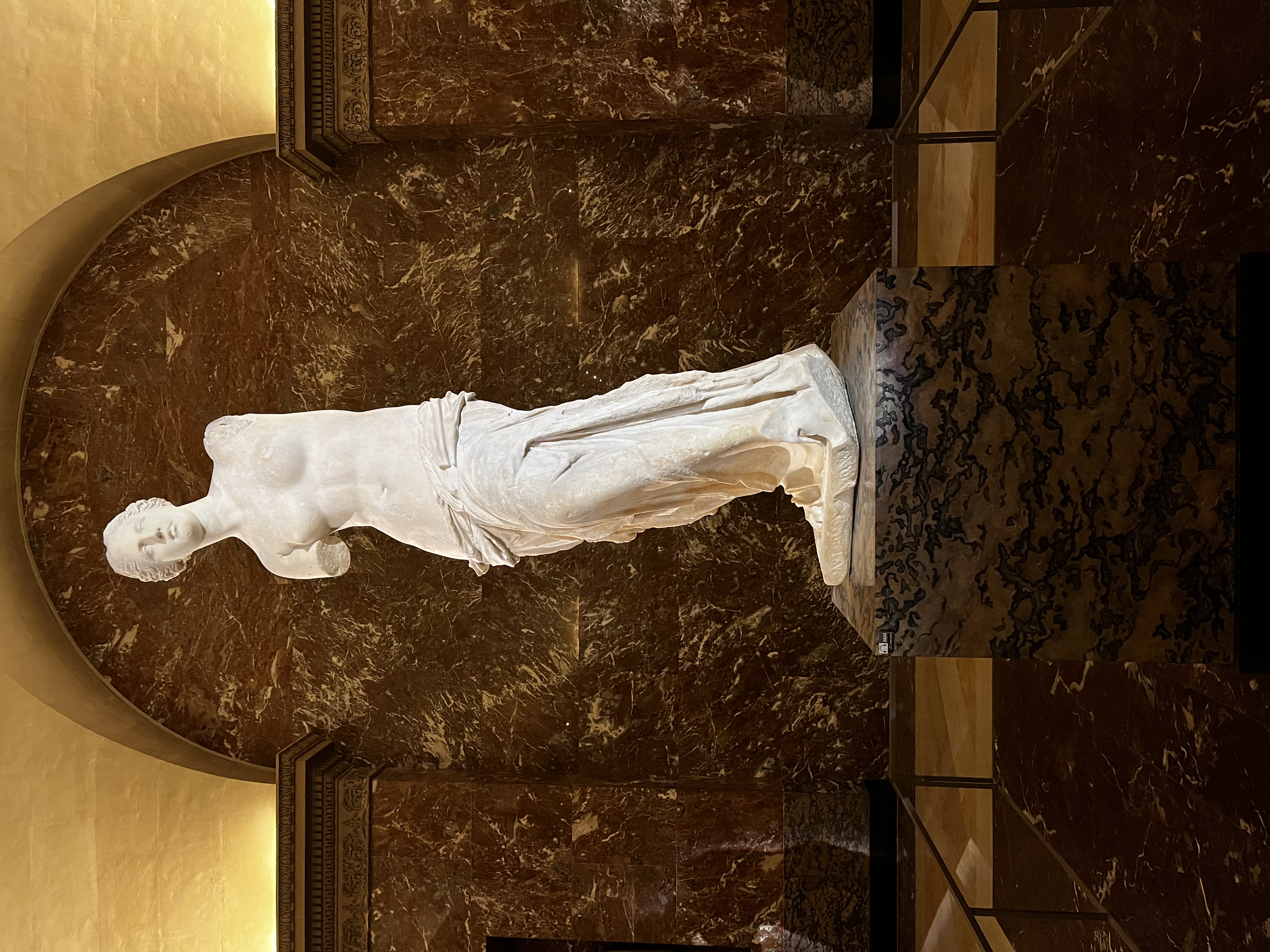
The Louvre is a living museum. Rooms may occasionally close without notice for operational reasons, and works are regularly moved for restoration, loans, or temporary exhibitions. The three great icons of the collection — the Mona Lisa, the Venus de Milo, and the Winged Victory of Samothrace — are on permanent display and accessible whenever the museum is open. For any other specific work, if it is unavailable on the day, an equally fascinating alternative will always be proposed.