About this tour
The Etruscans are one of history's great mysteries. They flourished in central Italy for centuries before Rome, built magnificent cities, created extraordinary art, and then were absorbed so completely into Roman civilisation that they left almost no written record of their own.
What they did leave behind is art of remarkable expressiveness and originality. The Louvre's Etruscan collection is one of the finest outside Italy, and it is almost always quiet. This is one of those rare corners of the museum where you can take your time, look closely, and find yourself genuinely moved.
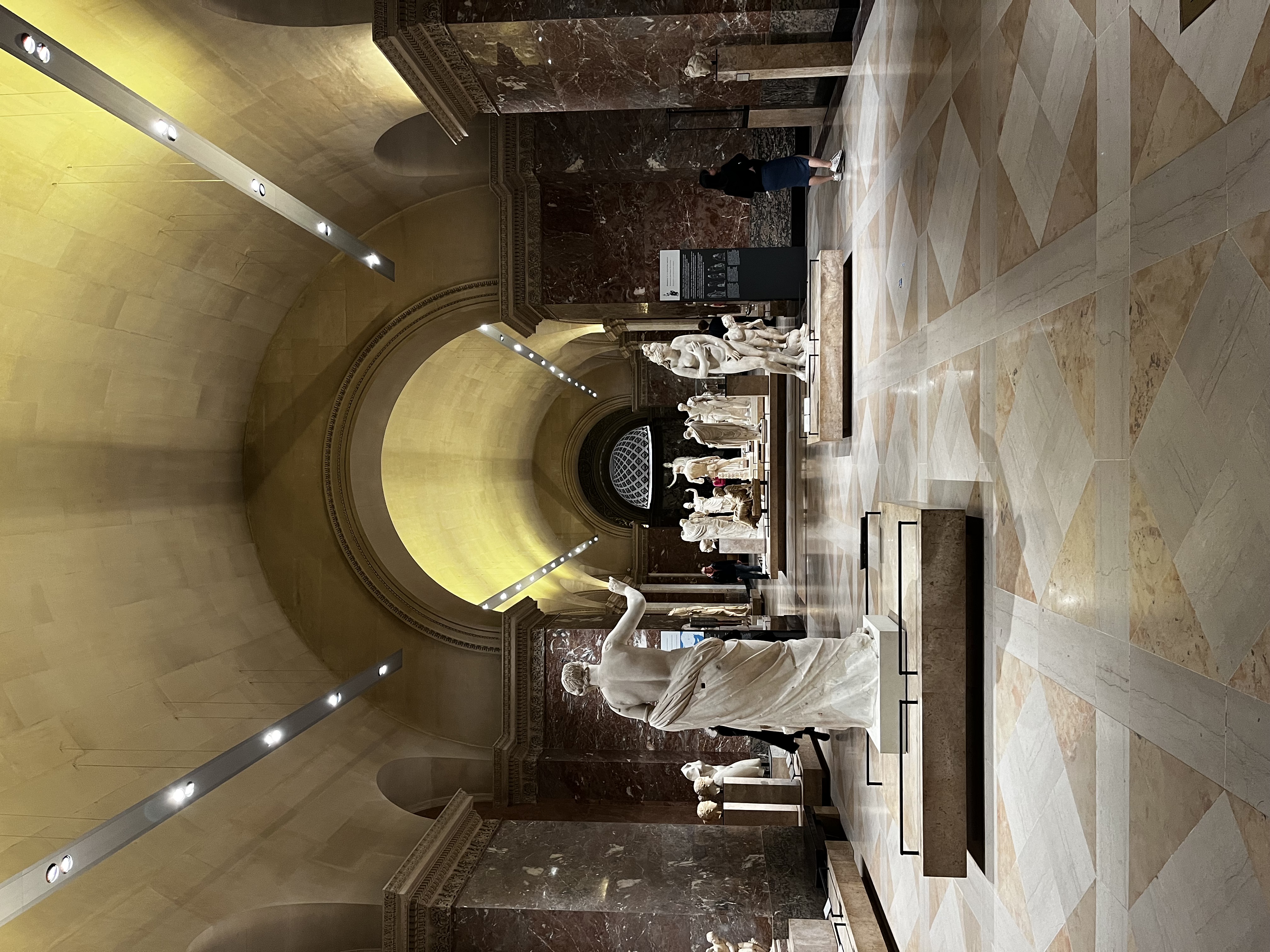
The Louvre's ancient galleries — among the most beautiful and least crowded spaces in the museum
What you will see
The tour explores the full range of Etruscan art: painted terracotta sarcophagi with their reclining couples, jewellery of astonishing technical refinement, bronze mirrors engraved with mythological scenes, and the haunting faces of funerary portraits. Along the way, we also understand how Etruscan culture fed directly into Roman art and religion.
If there is a particular aspect of Etruscan civilisation that interests you, mention it in your request. While nothing can be promised, every effort will be made.
Who is this tour for?
This tour is a perfect choice for visitors who already know the Louvre's main galleries and want to discover something entirely different, or for those with a genuine passion for the ancient world who want to go beyond Greece and Rome. It is also a wonderful option for anyone drawn to art that is both ancient and surprisingly modern-feeling in its emotional directness.
Availability
The Louvre is closed on Tuesdays. All other days are available, subject to your preferred time slot.
Important notice
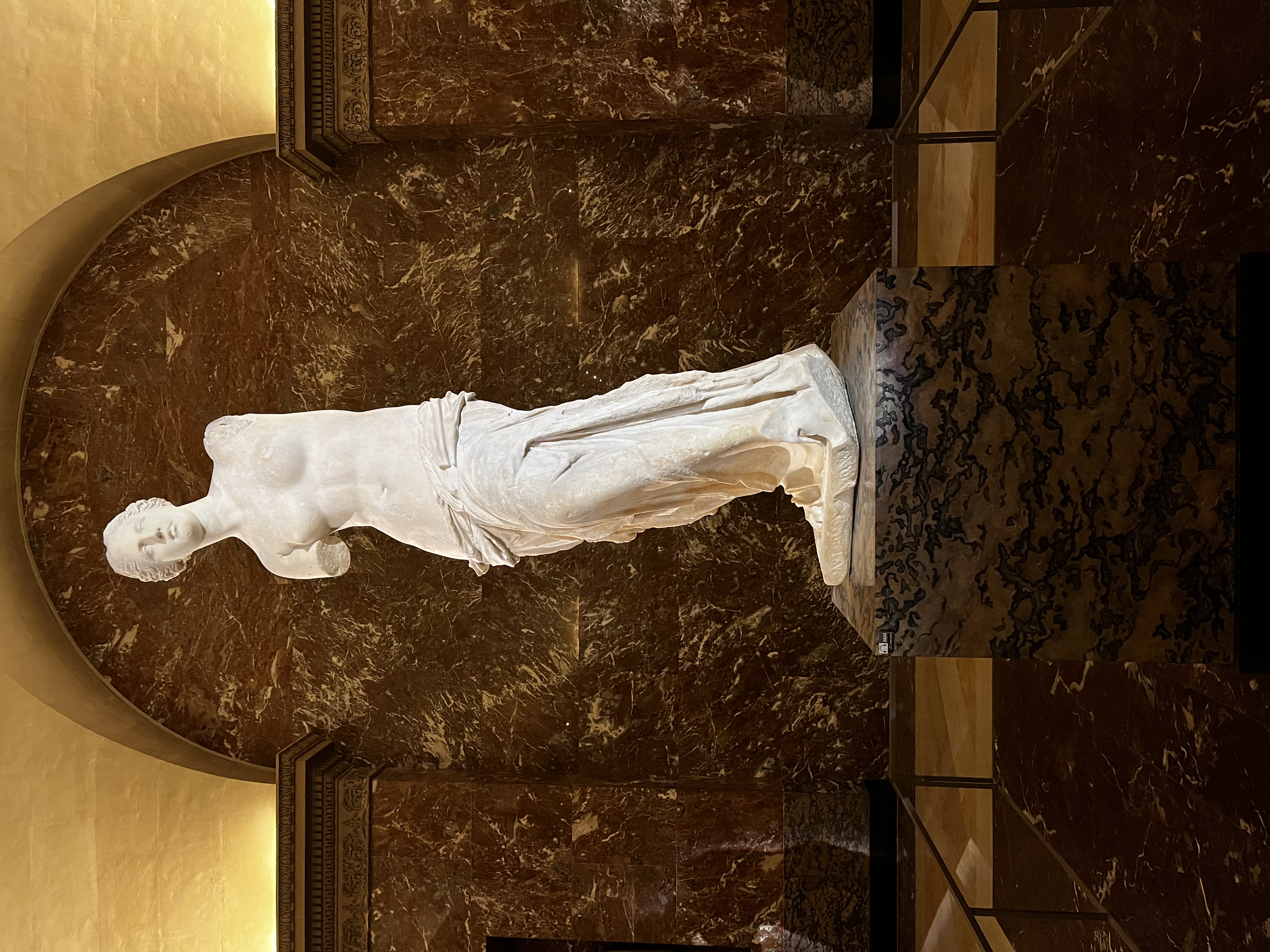
The Louvre is a living museum. Rooms may occasionally close without notice for operational reasons, and works are regularly moved for restoration, loans, or temporary exhibitions. The three great icons of the collection — the Mona Lisa, the Venus de Milo, and the Winged Victory of Samothrace — are on permanent display and accessible whenever the museum is open. For any other specific work, if it is unavailable on the day, an equally fascinating alternative will always be proposed.